

What’s the real difference between a Business Class lounge, a CIP terminal, and a VVIP service. Which one should you actually choose?
At first glance, all three promise a better airport experience, but they solve very different problems.
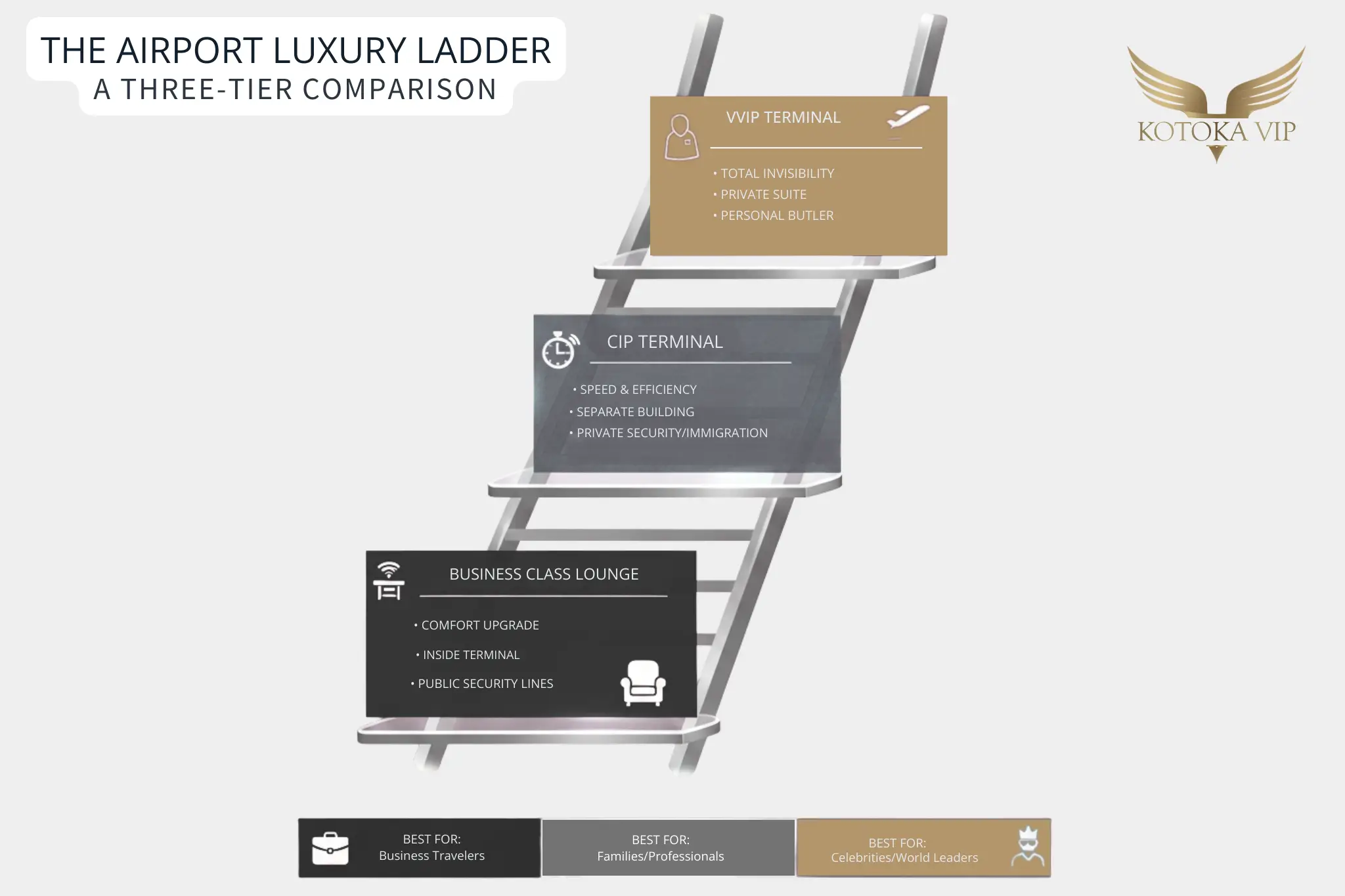
A Business Class lounge is a comfort upgrade. It gives you a quieter place to sit, eat, and relax after you’ve already cleared the standard airport processes.
The CIP terminal goes further by changing how you move through the airport, offering private check-in, security, and immigration in a separate space designed to save time and reduce stress.
VVIP services sit at the highest level, built for travelers who require total privacy, absolute discretion, and zero public exposure from curbside to aircraft door.
In this blog, you will learn how these services differ in privacy, access, cost, and eligibility, and which type of traveler each option is truly designed for, so you can choose the right level of service for your journey.
What Do Business Class, CIP, and VVIP Actually Mean?
Airport premium services are often grouped together, but in reality, they represent three very different levels of access, privacy, and control over your airport journey.
The key difference is not just comfort, it’s where you are processed and who you share the space with.
Business Class Lounges (Entry Level)
Business Class lounges are located inside the main airport terminal. You use the same check-in counters, security screening, and immigration lines as other passengers before entering the lounge. Once inside, you gain access to a quieter, more comfortable shared space with food, drinks, Wi-Fi, and seating. While more pleasant than the gate area, the lounge does not change how you move through the airport.
CIP Terminals (Mid-Tier Private Service)
CIP, or Commercially Important Person terminals, are usually separate buildings or accessed through private entrances away from the public terminal. They provide fast track check-in, security, and immigration inside a private space. A personal assistant handles the process while you wait in a calm lounge. Access is not tied to ticket class any traveler can use a CIP terminal by paying the service fee.
VVIP Terminals (Highest Tier)
VVIP terminals offer the highest level of privacy and exclusivity. Instead of a shared lounge, you stay in a private suite with dedicated staff. Security screening and immigration are handled one-on-one in a private area or directly in the suite. When it’s time to depart, a private car takes you straight to the aircraft, ensuring zero public exposure throughout the entire airport experience.
CIP vs VVIP vs Business Class — Comparison at a Glance.
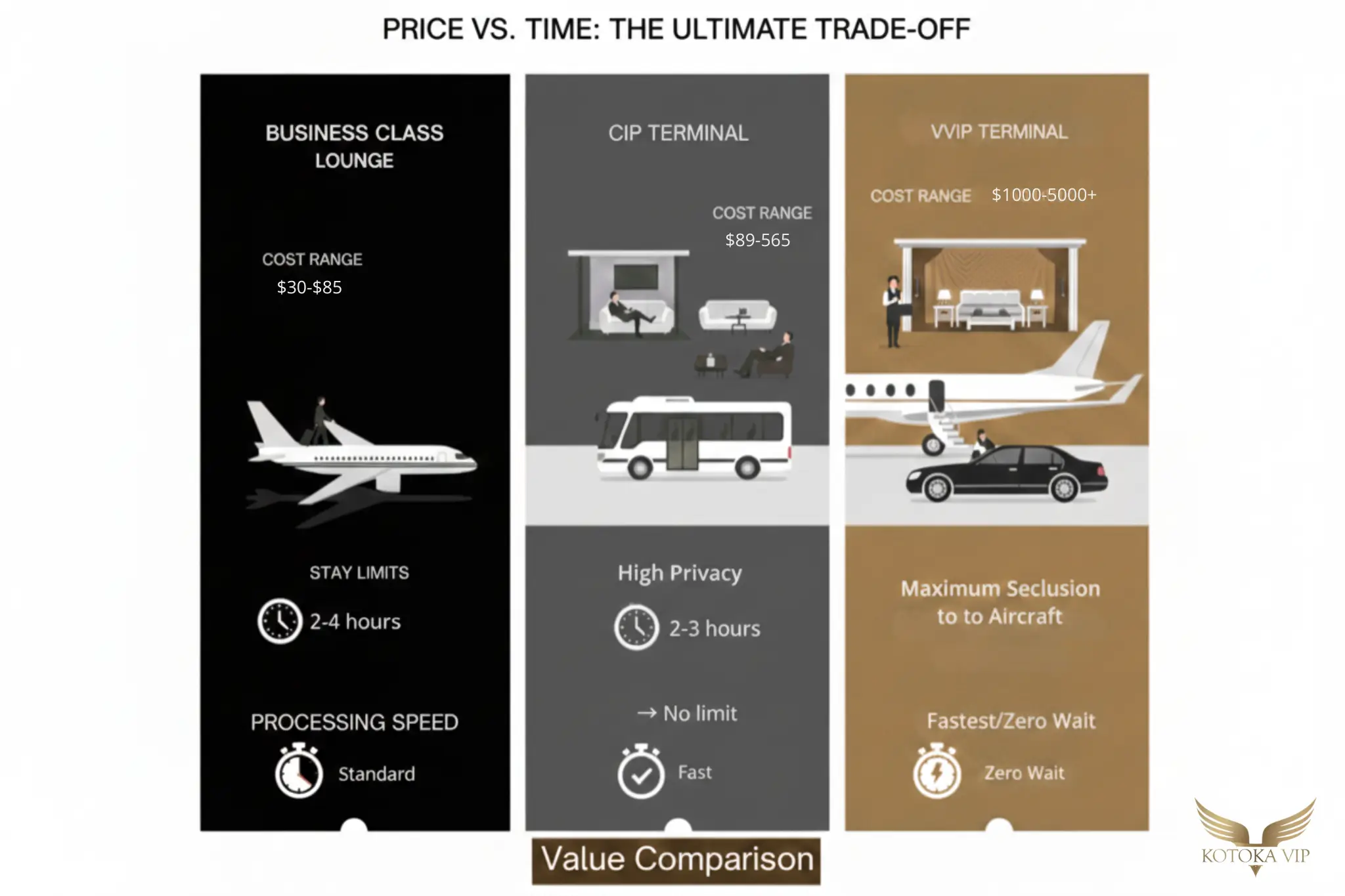
While all three services fall under premium airport experiences, they differ sharply in how much time they save, how private they are, and who they’re designed for.
The fastest way to understand the difference is to look at where you’re processed, how you board, and how visible you are to other travelers.
Business Class lounges enhance comfort but keep you inside the public system. CIP terminals remove you from the main terminal and prioritize speed. VVIP terminals eliminate public exposure entirely and are built around discretion.
| Feature | Business Class Lounge | CIP Terminal | VVIP Terminal |
| Location | Inside public terminal | Separate building or private entrance | Private terminal or suite |
| Security & Immigration | Public lines (sometimes fast track) | Private processing inside terminal | One-on-one, in-suite processing |
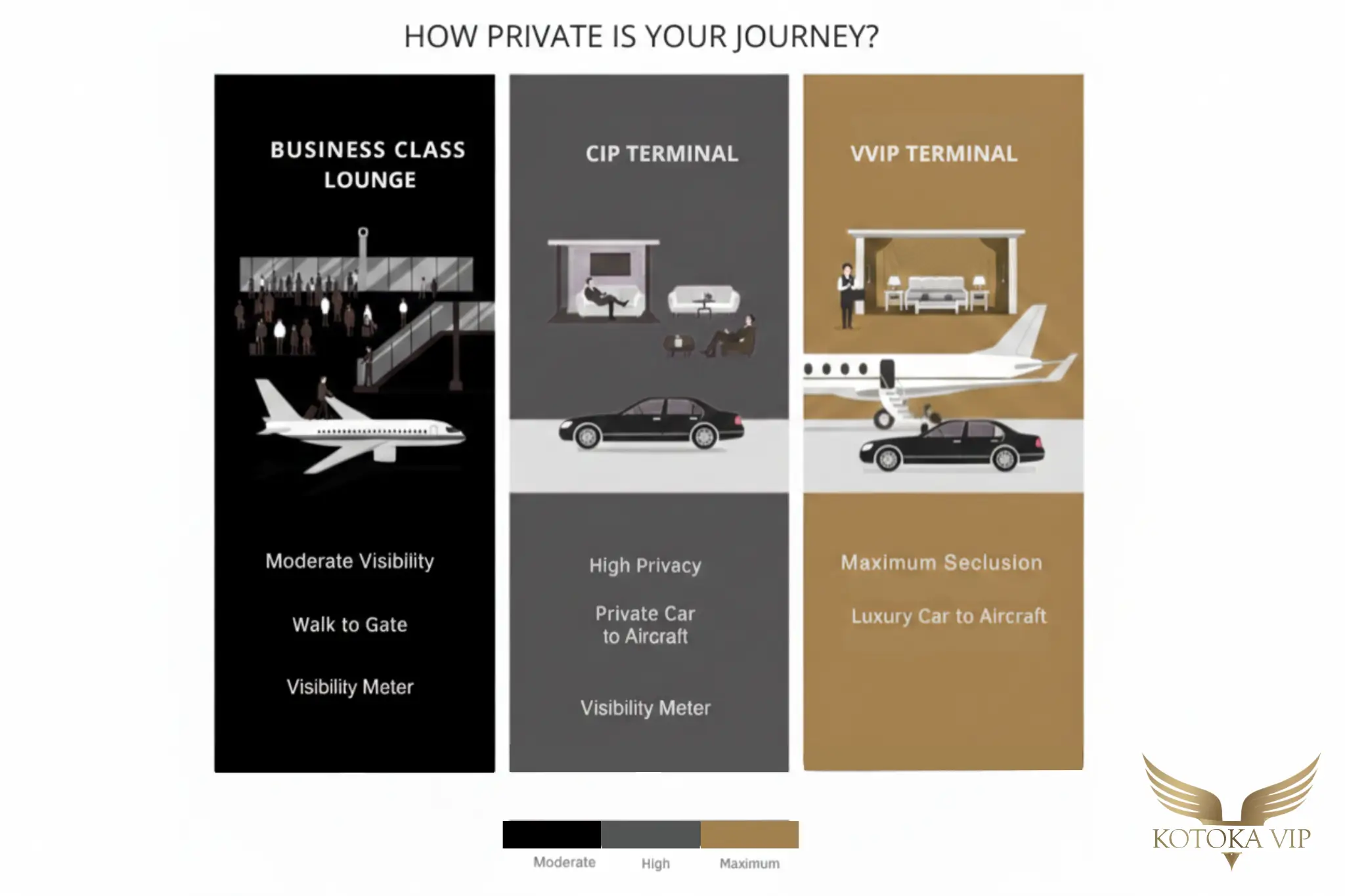
| Boarding Method | Walk to gate | Private van or Car | Luxury car directly to aircraft |
| Privacy Level | Moderate (shared space) | High (semi-private) | Maximum (total seclusion) |
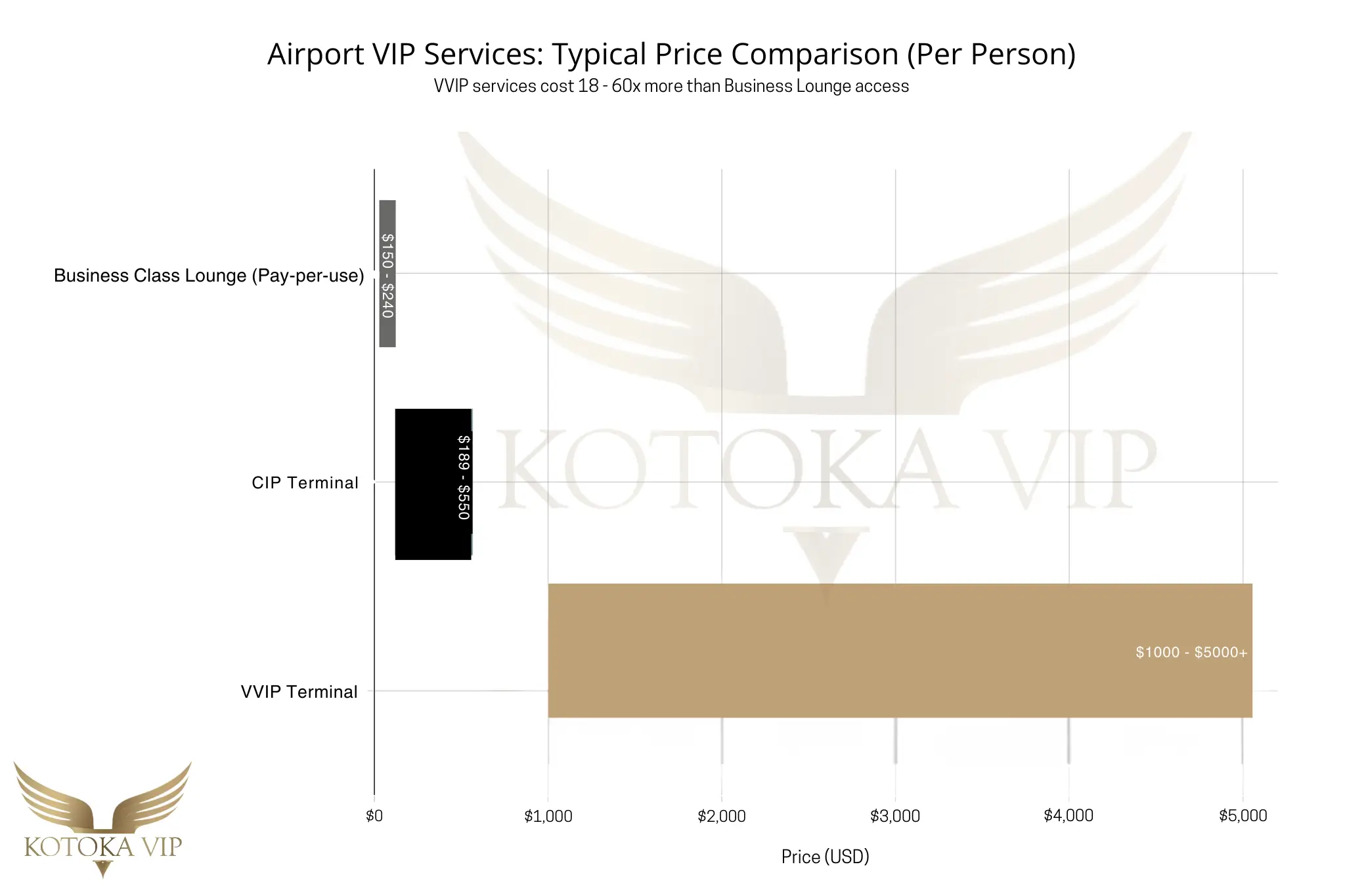
| Price Range | $150–$240 | $189–$450 | $1,000–$5,000+ |
| Best For | Comfort-focused travelers | Time-sensitive travelers | Privacy-critical individuals |
Who Uses Each Service?
Understanding who each airport service is designed for makes it easier to decide which option fits your travel style.
The differences are less about status and more about how much time you have, how much help you need, and how visible you want to be.
From shared premium spaces to fully private terminals, each service attracts a very specific type of traveler.
Business Class Lounge Users
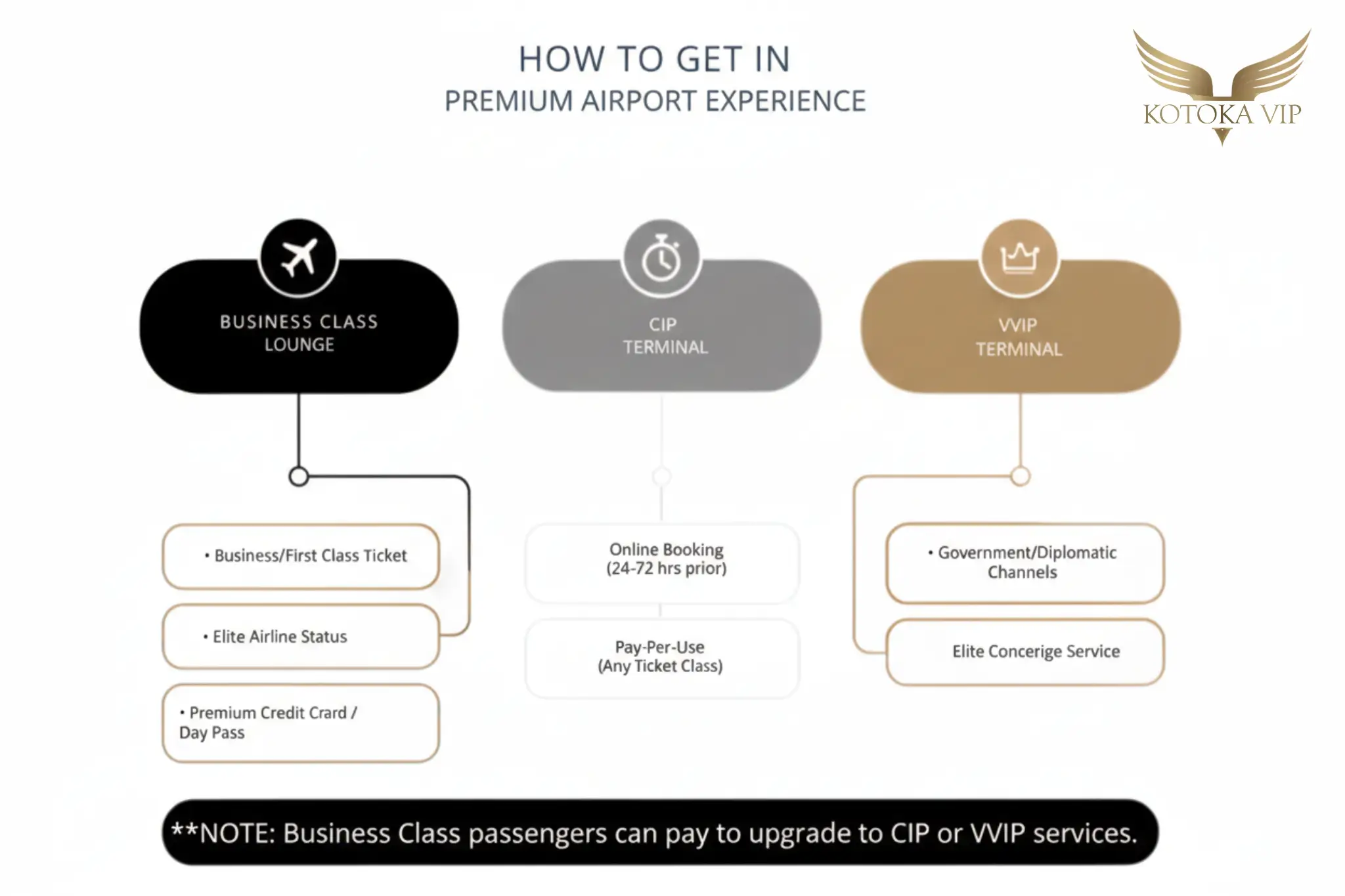
Business Class lounges are mainly used by travelers who already qualify through their ticket or membership.
This includes Business or First Class passengers, frequent flyers with elite airline status, and travelers with premium credit cards that offer lounge access.
These users want a comfortable place to sit, eat, or work before boarding, but are generally comfortable moving through the public airport process.
CIP Terminal Users
CIP terminals are popular with travelers who value speed and assistance over seat class.
This includes business executives with tight schedules, families traveling with children, and passengers who need extra support navigating the airport.
Many Economy Class travelers also choose CIP services to access private processing, personal assistance, and a calmer environment without upgrading their airline ticket.
VVIP Terminal Users
VVIP terminals are designed for travelers who require maximum privacy and discretion.
These include celebrities, government officials, and ultra-high-net-worth individuals who must avoid public exposure.
Senior executives handling confidential negotiations or sensitive business matters also rely on VVIP services to ensure total secrecy, controlled access, and zero interaction with the public.
Privacy, Security, and Discretion Explained
The real difference between Business Class, CIP, and VVIP services is not luxury. it’s how visible you are while moving through the airport. Each level changes who sees you, where you are processed, and how controlled your environment is.
Business Class lounge keeps you inside the public airport system. You move through visible check-in, security, and immigration areas, then wait in a shared lounge with other passengers. Privacy is limited to being away from the gate, not away from people.
CIP terminal offers high privacy but not full invisibility. You use a separate building or private entrance, with dedicated security and immigration away from public crowds. However, you still share space with a small number of other CIP travelers.
VVIP terminal is a sealed, private environment. You remain in a private suite while security and immigration officers come to you. You are transported directly to the aircraft, avoiding all public areas.
Note:
- Private vs. Secret, the key distinction.
- CIP is private, but you may still be seen by other premium travelers.
- VVIP is secret, designed to eliminate public exposure.
- Paparazzi risk exists in public and CIP spaces, but not in VVIP.
- Security teams integrate fully and discreetly only in VVIP settings.
Facilities & Services — What You Actually Get.
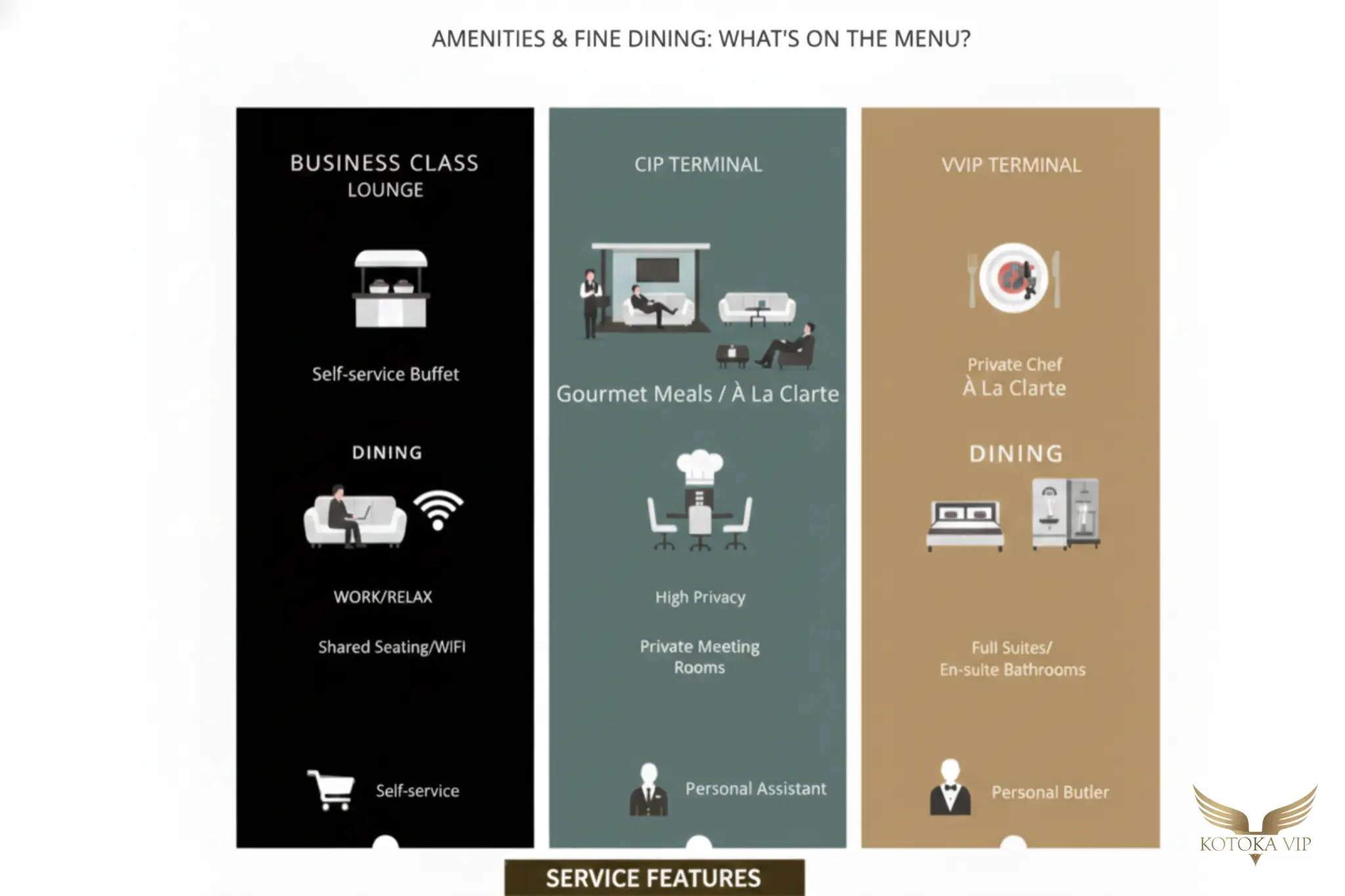
While all three services improve comfort, the facilities increase dramatically as you move from shared spaces to fully private environments. The difference lies in how personalized the experience becomes.
Business Class lounges focus on comfort while you wait.
They offer shared seating areas, complimentary buffet-style food and drinks, fast WiFi, and charging points.
Most lounges include shower facilities, and some larger ones add quiet zones or rest areas.
Everything is self service, and the space is shared with other eligible passengers.
CIP terminals provide a more professional and controlled environment.
Guests are welcomed into a quieter lounge with higher quality gourmet meals and premium beverages.
Facilities often include private meeting rooms for work, prayer rooms where applicable, and dedicated staff support.
A personal assistant manages luggage, documents, and coordination while you relax.
VVIP terminals deliver a fully personalized, hotel like experience.
Instead of a shared lounge, you receive a private suite with bedroom and bathroom. A personal butler and concierge handle every request.
Dining is à la carte, prepared by a private chef, and many terminals also offer spa services and private garages for complete discretion.
How Fast Is the Processing? (Security & Immigration)
Speed is one of the biggest reasons travelers upgrade beyond a standard airport experience. The difference between these services lies in where processing happens and how many people you wait with.
| Service | Security Processing | Immigration & Customs |
| Business Class Lounge | Uses public security lanes; some airports offer a fast-track line, but waits still depend on terminal crowd levels. | Standard public counters shared with other passengers. |
| CIP Terminal | Private screening located inside the CIP terminal, away from the main terminal. | Dedicated immigration officers process documents inside the private facility. |
| VVIP Terminal | One-on-one screening conducted in a private area or directly inside the suite. | Immigration and customs officers come to the suite, resulting in near-zero wait time. |
In short, Business Class improves comfort but not speed. CIP significantly reduces waiting by removing public queues. VVIP eliminates waiting almost entirely.
How Much Do These Services Cost?
Pricing reflects how much time, privacy, and staffing are dedicated exclusively to you.
Business Class Lounge:
$150–$240
You’re paying for comfort, food, drinks, Wi-Fi, and a quieter place to wait.
CIP Terminal:
$189–$450
The cost covers private processing, fast-track security and immigration, and a personal assistant who manages the entire airport journey.
VVIP Terminal:
$1,000–$5,000+
This price includes private suites, one-on-one security and immigration, personal staff, luxury transport to the aircraft, and absolute discretion.
The higher the cost, the fewer people you encounter and the faster the process becomes.
How to Book & Access Each Service.
Access to premium airport services depends on how exclusive the experience is. The more private the service, the more structured the booking process.
Business Class Lounge Access:
Access is usually automatic. Business or First Class passengers simply show their boarding pass.
Frequent flyers with elite airline status may enter even when flying Economy.
Many premium credit cards also provide lounge access, and some lounges sell one-day passes at the door or online.
CIP Terminal Booking:
CIP terminals require advance booking, typically 24 to 72 hours before departure or arrival.
Travelers must provide passport details, flight numbers, and basic travel information so private processing can be coordinated.
Bookings are usually made through airport websites, travel agents, or concierge providers such as Kotoka VIP.
VVIP Terminal Arrangements:
VVIP access is handled exclusively through specialized concierge services or official government channels.
Diplomatic visits require formal documentation and longer notice periods, while commercial bookings still need advance clearance, detailed passenger information, and strict coordination with airport authorities.
Which Service Should You Choose?
Choosing the right airport service comes down to time, visibility, and budget. Each option solves a different problem.
Choose Business Class Lounge If…
You mainly want comfort, not speed. You’re happy to move through the public terminal but want a better place to sit, eat, and work. This option works best for budget conscious travelers who already qualify through their ticket, status, or credit card.
Choose CIP Terminal If…
Time matters. You want faster processing, personal assistance, and a calmer environment without needing a premium airline ticket. CIP is ideal if you’re flying Economy but want private handling, traveling with family, or navigating a busy airport on a tight schedule.
Choose VVIP Terminal If…
Privacy is nonnegotiable. You cannot be seen in public and require total discretion, controlled access, and maximum security. This option is designed for travelers whose safety, confidentiality, and invisibility matter more than cost.
Is CIP Worth It If You Already Fly Business Class?
It depends on what problem you’re trying to solve. A Business Class ticket already gives you lounge access and priority handling, but it does not remove you from the public airport process. You still move through visible security and immigration areas.
CIP is worth it if the airport is crowded, you’re traveling during peak hours, or time is critical. It’s also valuable if you have heavy luggage, are traveling with children or elderly passengers, or need a quieter environment to stay focused. The private processing and personal assistant save far more time than a priority lane.
CIP may not be worth it if the airport is quiet, you already clear security quickly, or the trip is short and simple.
Takeaway: If Business Class improves comfort, CIP improves control and that difference matters when time or stress is the priority.
Availability Around the World.
Business Class lounges are available at almost every international airport, making them the most accessible premium option worldwide.
CIP terminals are common in Europe, the Middle East, Africa, and Asia, especially at major international gateways. They are less common in the United States but widely used in regions where travelers value fast track processing and private handling.
VVIP terminals exist only at select global hubs due to the need for separate buildings and dedicated security. Notable examples include London Heathrow, Los Angeles, Dubai, and Mumbai. These facilities were originally built for government use and now serve a limited number of private travelers.
Conclusion
Airport premium services follow a clear ladder. Business Class lounges, upgrade comfort. CIP terminals, upgrade speed and control. VVIP services, deliver total privacy and invisibility.
For most travelers, CIP offers the best balance, private processing, personal assistance, and major time savings without the extreme cost of a VVIP terminal.
Whether you’re flying Economy or Business Class, it changes how you move through the airport, not just where you wait.
If you are ready for a faster, calmer airport experience, contact Kotoka VIP to book, enquire, or plan the right level of service for your next journey.
FAQs.
How long can I stay?
Business Class lounges usually allow 2–4 hours. CIP lounges are typically limited to 2–3 hours, depending on local rules. VVIP terminals have no strict time limits and follow the flight schedule.
Can I upgrade from Business Class?
Yes. Business Class passengers can pay extra to use CIP or VVIP services if available and booked in advance.
Can I enter without a ticket?
Business Class lounges usually require a same-day boarding pass. CIP and VVIP services operate in separate facilities and require pre-booking rather than lounge walk-in access.
Are families allowed?
Yes. Families commonly use CIP services for faster, less stressful processing. VVIP terminals also accommodate families when privacy is required.
Are CIP and VVIP available on arrival and departure?
Yes. Both services can be booked for arrivals and departure, offering private immigration and customs processing.